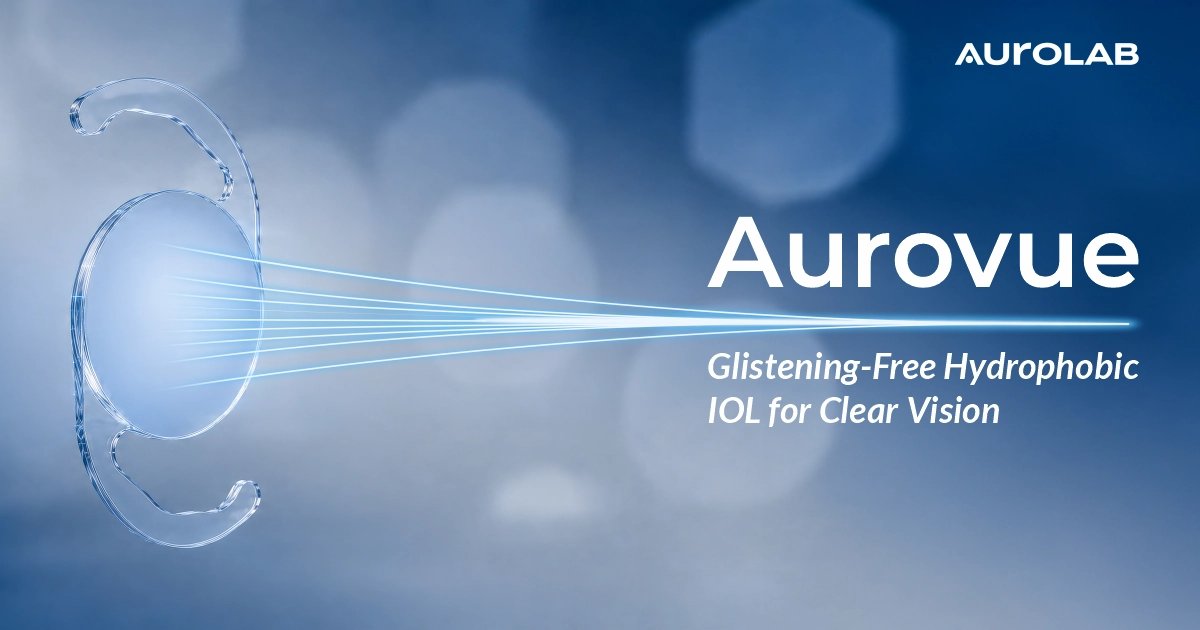
# What is a hydrophobic IOL?
A hydrophobic IOL (intraocular lens) is an artificial alternative to the cloudy natural lens of the human eye, which is replaced during cataract surgery.
It is made of a special acrylic(glassy thermoplastic) material with an innate tendency to repel water. The term "Hydrophobic" literally means water-fearing. This lens absorbs meagre water(less than 1%) from the eye fluid.
There is a growing awareness of the artificial lens material used as eye implants. Ever since the lenses became available in foldable form (1980s), expectations for quick recovery and clean surgical results have been high. Once the surgeon inserts the lens in folded form via micro-incision, it returns to its original shape. The hydrophobic IOL lens with 360-degree square edge grips tightly to the eye’s capsule in a stable placement. The shift in lens material from early-day silicones to biocompatible acrylic materials reduced healing time and improved the results with finer micro-incisions.
## What are the benefits of Hydrophobic IOL?
These water-repelling lenses are preferred over hydrophilic ones for their excellent PCO resistance and lesser risk of calcification. So the possibility of having to replace the entire lens within a decade is completely ruled out.
## What is the drawback of Hydrophobic IOL?
Surgeons may find Hydrophilic lenses more flexible to handle during surgery. Glistening can occur in any lens form but is more probable with Hydrophobic lenses. The phenomenon might not be serious in most cases. However, for best visual acuity and user experience, Aurolab builds hydrophobic IOLs from an acrylic material developed in-house.
Glistening is associated with certain manufacturing methods using older hydrophobic acrylic polymers. Our team engineers the chemistry from scratch, turning in a high-quality glistening-free IOL that doesn’t cause the slightest inconvenience to the patient with the implant.
## Why the Material Inside a Foldable Intraocular Lens Matters?
An intraocular lens isn't just an implant that can be placed and forgotten. It must sit comfortably in the capsular bag of the eye for decades without causing trouble. It should be flexible enough to be folded and passed through a tiny incision and unfolded without damaging the surrounding tissue.
[Aurovue](https://aurolab.com/iol.html) is built from a hydrophobic acrylic polymer that can be engineered to achieve a specific purpose. It is a smooth but strong implant capable of retaining its shape long-term.
### PCO Prevention Lens
PCOs are frustrating – be it in gynaecology or ophthalmology contexts, isn’t it? Posterior Capsule Opacification (PCO)- though it can be corrected in a single outpatient visit, it still robs the precious time of patients apart from delaying the benefits of cataract surgery.
Patients refer to it as secondary cataract, though clinicians can correct it in a painless and non-invasive short procedure via YAG Laser Capsulotomy. Patients shall term the cataract surgery as hassle-free only if it does not lead to complications as they might need to free up time amid their hectic professional schedule.

### Bio-adhesion of Aurolab cataract lens
The tacky texture of hydrophobic iol lenses ensures optimal bio-adhesion within the capsular bag, reducing the incidence of epithelial cell migration. This characteristic greatly brings down the risk of post-surgical complications, thereby maintaining lens clarity and promoting quicker healing. This means fewer follow-up complications and clear vision for longer periods.

## How lower glass transition temperature matter to surgeons & patients?
### What are the benefits for surgeons?
We use amorphous materials with a lower glass transition temperature(Tg), up to 8 Celsius, for manufacturing hydrophobic IOLs. Below this point, the material shall remain hard and brittle. If the Tg of the implanted IOL were in the range of normal body and room temperature(30 to 40 Celsius), the lens can behave unpredictably when it is inside the eye.
The lower Tg enables surgeons to tightly fold and inject the soft and flexible Hydrophobic IOL lens through micro-incisions (up to 2.8 mm) with minimal effort. It also reduces the risk of damage to fragile ocular tissue, eliminating surgical complications. It saves the time of clinicians by reducing patient visits.
### What are the benefits for patients?
Aurovue aids in clear and high optical vision. Patients get crisp vision at high resolution right from the start. Cataract patients can feel the difference right after the surgery.
Featuring advanced [**Continuous Focus Vision** (CFV)](https://pmc.ncbi.nlm.nih.gov/articles/PMC13520328/pdf/12886_2026_Article_5264.pdf), Aurovue provides an extended, seamless focal range. As highlighted in clinical study findings, CFV optimizes visual outcomes across near, intermediate, and far distances.
Their everyday activities like reading, driving, etc. feel perfect, and they can recognise and discern faces clearly without ambiguity. This gratifies their curiosity as they had been constrained by cloudy vision for a marked period.
## Experience Zero Glistenings with Foldable Intraocular lens

Hydrophobic IOL lenses are popular for their superior resistance to calcification and PCO. The PCO prevention lenses are known for long-term vision clarity and low surgical complication rates. On the flip side, they can cause glistenings due to certain manufacturing methods and temperature changes.
Glistenings are microscopic fluid-filled pockets that form inside the lens material over time. The fluid collects from the lens matrix. These microvacuoles reflect incident light rays, producing a sparkling look.
### Experience True-to-Life Colours!
Different wavelengths of light bend at slightly different angles, producing a chromatic aberration effect. Generally, people with glistening tend to be asymptomatic. In severe cases, it can cause glare, image smearing at the edges, and reduced contrast, posing difficulties in night driving. The vision perceived in bright settings might be faintly blurred or fringed.

Hydrophobic lenses generally have lower Abbe numbers than Hydrophilic IOLs. Though Hydrophobic intraocular lenses tend to disperse light relatively more compared to their other acrylic counterpart, Aurolab has designed Aurovue to keep this effect to a minimum, so colours stay accurate, and vision stays sharp. With Aurovue's ophthalmic hydrophobic IOL lens material, the glistening-free vision remains unaltered for several years.
## Hydrophobic IOL: Built In-House, Built to Last
We chose the harder path of engineering our own ophthalmic hydrophobic material, but that decision gives Aurolab control over every single stage of production. It is noteworthy that most manufacturers don't have such an advantage.
Such a grip on quality lets us hold Aurovue, as an [Aurolab cataract lens](https://aurolab.com/iol.html), to the standards we'd want for our own families, with that extra care and attention to every detail.
It's a lens built on the belief that good vision shouldn't come with an element of uncertainty or the slightest displeasure. We're not just correcting sight; we're protecting it.